SEO can feel confusing when you first start. You hear people talking about keywords, backlinks, indexing, technical SEO, Google ranking factors, content optimization, and suddenly it sounds like a full-time science.
But SEO is not magic. At its heart, SEO is simply the process of helping search engines understand your website so the right people can find your content.
If your website is like a small shop, SEO is the road, signboard, map, and reputation that help people reach that shop. Without SEO, even a useful website can stay hidden. With proper SEO, your content can bring visitors again and again without paying for every click.
This guide is the main hub for the SEO & Digital Growth section of VWS Online. It explains SEO in simple language and connects you to deeper guides on on-page SEO, off-page SEO, technical SEO, keyword research, and blogging SEO.
What is SEO?
SEO stands for Search Engine Optimization. It means improving your website so search engines like Google can find, understand, and rank your pages for relevant searches.
For example, if someone searches “how to build a website from scratch,” Google tries to show the most useful pages for that query. SEO helps your page become one of those useful results.
SEO is not only about adding keywords. It includes content quality, page structure, website speed, internal links, backlinks, mobile experience, and how well your page answers the searcher’s question.
A simple way to understand SEO is this:
| SEO part | Simple meaning |
|---|---|
| Keyword research | Finding what people search |
| On-page SEO | Improving the content and page structure |
| Technical SEO | Making sure Google can crawl and index your site |
| Off-page SEO | Building trust and authority outside your website |
| Content SEO | Creating helpful content that matches search intent |
When these parts work together, your website has a better chance of ranking.
Why SEO Matters for Website Growth
A website without SEO can still exist, but it may not attract visitors. You may publish helpful articles, build useful tools, or offer good services, but if people cannot find them through search, the growth stays slow.
SEO matters because it can bring long-term traffic. A good post can rank for months or even years. A useful tool page can attract repeat visitors. A well-structured guide can send people to other pages on your website.
For bloggers, SEO can increase traffic and AdSense revenue. Similarly,for businesses, it can bring leads. For freelancers, it can build authority. For educational websites, it can help students and learners find useful resources.
Paid ads stop when the budget ends. SEO keeps working when the content is strong and properly maintained.
How Google Ranking Works
Google ranking is not based on one single factor. Google looks at many signals to decide which pages deserve to appear first.
At a beginner level, you can think of Google asking these questions:
Does this page answer the search query?
Is the content useful and clear?
Can Google crawl and index the page?
Is the website fast and mobile-friendly?
Does the website look trustworthy?
Are other pages or websites linking to it?
Is the content original and better than similar pages?
This is why ranking is not only about writing a long article. A page also needs structure, clarity, internal links, good user experience, and enough trust.
If your page answers the user better than competing pages, loads quickly, and belongs to a well-organized website, it has a stronger chance of ranking.
On-Page SEO, Off-Page SEO, and Technical SEO Explained
SEO becomes easier when you divide it into three main parts: on-page SEO, off-page SEO, and technical SEO.
| SEO type | What it focuses on | Example |
|---|---|---|
| On-page SEO | Content and page optimization | Headings, keywords, meta description, internal links |
| Off-page SEO | Authority outside your website | Backlinks, brand mentions, guest posts |
| Technical SEO | Website health and crawlability | Speed, sitemap, indexing, mobile usability |
On-page SEO is what you control inside your page.
Off-page SEO is how other websites and platforms show trust toward your site.
Technical SEO is the foundation that helps search engines access and understand your website.
A beginner should not try to master everything at once. Start with keyword research and on-page SEO first. Then improve technical SEO. After that, work on off-page authority.
Keyword Research Basics
Keyword research is the first real step of SEO. Before writing content, you need to know what people are searching for.
A keyword is a word or phrase someone types into Google. For example:
how to rank website on Google
SEO guide for beginners
WordPress SEO checklist
keyword research guide
blogging SEO tips
The mistake many beginners make is choosing keywords only because they sound popular. Popular keywords are often very competitive. A new website usually grows faster by targeting specific, low-competition keywords first.
For example, “SEO” is too broad. But “SEO checklist for WordPress beginners” is more specific and easier to target.
Good keyword research helps you understand three things:
What people want
How difficult the topic is
What type of content Google already ranks
If the top results are beginner guides, you should write a beginner guide. If the top results are tools, a simple article may not be enough. Matching search intent is more important than repeating the keyword many times.
Read more: Keyword Research Guide
Search Intent: The Hidden Part of SEO
Search intent means the reason behind a search.
Two people may use similar words but want different things. One person searching “best SEO tools” may want a list. Another searching “how to use SEO tools” may want a tutorial.
Most SEO failure happens when content does not match intent.
There are four common types of search intent:
| Search intent | User wants | Example |
|---|---|---|
| Informational | To learn something | what is SEO |
| Navigational | To find a specific site or brand | Google Search Console |
| Commercial | To compare options | best SEO tools |
| Transactional | To buy or take action | buy SEO software |
For beginner blog posts, informational intent is very common. Your job is to explain clearly, answer the main question, and guide the reader to the next useful step.
Step-by-Step SEO Roadmap for Beginners
SEO becomes manageable when you follow a clear order. Many beginners jump directly to backlinks or advanced tools before fixing the basics. That is like decorating a shop before building the entrance.
Here is a simple SEO roadmap:
| Step | What to do | Why it matters |
|---|---|---|
| 1 | Choose a clear niche | Helps Google understand your website topic |
| 2 | Do keyword research | Finds topics people actually search |
| 3 | Understand search intent | Helps you create the right type of content |
| 4 | Write helpful content | Gives users a reason to stay |
| 5 | Optimize on-page SEO | Improves page clarity |
| 6 | Add internal links | Connects related pages |
| 7 | Fix technical SEO | Helps crawling and indexing |
| 8 | Improve speed and mobile experience | Better user experience |
| 9 | Build authority | Supports trust and ranking |
| 10 | Update old content | Keeps rankings fresh |
If your website is new, focus first on helpful content, clean structure, and internal linking. Backlinks matter, but they work better when the site foundation is already strong.
On-Page SEO Guide for Beginners
On-page SEO is the easiest place to start because you control it directly.
A well-optimized page should have:
A clear title
A useful introduction
Proper H2 and H3 headings
Natural keyword placement
Helpful examples
Internal links
Optimized images
Short and readable paragraphs
A meta description
A clear answer to the main query
The goal is not to stuff keywords everywhere. The goal is to make the page easy to understand.
For example, if your post targets “technical SEO checklist,” the page should actually include a checklist, explain each point, and help the reader apply it. Do not write general SEO advice under a specific title.
Google and users both prefer clarity.
Off-Page SEO Techniques
Off-page SEO is about building trust beyond your own website. The most common part of off-page SEO is backlinks.
A backlink is a link from another website to your page. When a relevant and trustworthy website links to you, it can act like a recommendation.
But not all backlinks are useful. Low-quality spam links can harm trust instead of helping.
Good off-page SEO can include:
Guest posting on relevant websites
Getting mentioned in resource pages
Creating useful tools people naturally link to
Publishing original research or data
Building a professional brand presence
Sharing content in relevant communities
For a beginner, the safest method is to create genuinely useful content first. Helpful guides, calculators, templates, and original resources attract better links over time than thin articles written only for ranking.
Technical SEO Checklist
Technical SEO helps search engines crawl, index, and understand your website properly.
Even the best content can struggle if Google cannot access it.
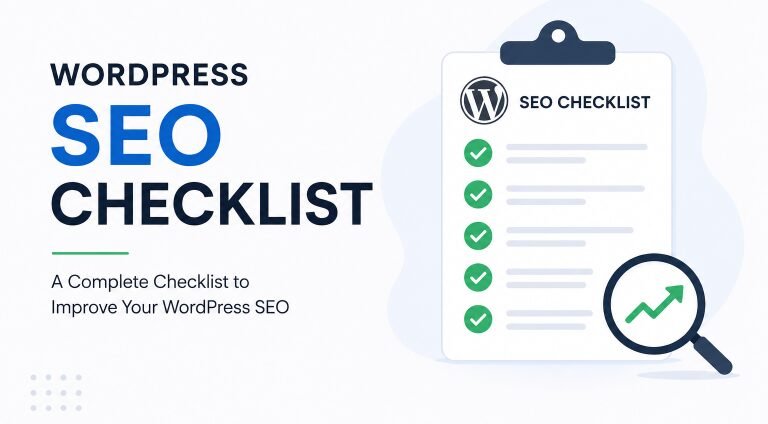
A basic technical SEO checklist includes:
Website is using HTTPS
Pages are mobile-friendly
Sitemap is submitted to Google Search Console
Robots.txt is not blocking important pages
Important pages are indexable
Website loads fast
Broken links are fixed
Images are compressed
URLs are clean and stable
Structured data is added where useful
Technical SEO may sound advanced, but many beginner issues are simple. Slow pages, broken links, missing sitemap, and poor mobile layout are common problems.
Fixing these issues can make your site healthier and easier to rank.
Blogging and Content SEO
Blogging SEO is where strategy and writing meet.
A blog post should not only contain information. It should solve a specific problem better than competing pages.
Before writing a post, ask:
Who is searching this?
What do they already know?
Similarly, What answer do they need first?
What examples will make it easier?
Moreover, What should they read next?
A good blog post flows naturally. It starts with the problem, explains the basics, gives useful steps, adds examples, answers common questions, and links to related content.
For AdSense websites, strong content also helps increase engagement. If visitors stay longer and open more pages, your site becomes more valuable.
Read more: Blogging & Content SEO Guide
Google Ranking Factors Beginners Should Understand
Google uses many ranking signals, but beginners do not need to memorize everything.
Focus on the factors you can actually improve:
| Ranking area | What to improve |
|---|---|
| Relevance | Match the keyword and search intent |
| Content quality | Write useful, original, clear content |
| Website structure | Use categories, headings, and internal links |
| Technical health | Fix speed, indexing, and mobile issues |
| Authority | Earn relevant backlinks and mentions |
| User experience | Make pages readable and easy to use |
| Freshness | Update outdated content when needed |
The strongest SEO pages usually combine several of these. A page with good content but poor structure may underperform. A technically perfect page with thin content may also fail.
SEO works best as a complete system.
Common SEO Mistakes Beginners Make
Most beginners do not fail because SEO is impossible. They fail because they repeat avoidable mistakes.
Common mistakes include:
Choosing keywords without checking search intent
Writing thin content
Copying competitor articles without adding anything new
Ignoring internal links
Changing URLs without redirects
Publishing many random topics
Using too many tags and categories
Ignoring page speed
Not using Google Search Console
Expecting rankings in a few days
One of the biggest mistakes is writing for search engines only. If a real person does not find the page useful, Google has little reason to keep ranking it.
SEO needs patience. A good website grows like a tree. You plant content, connect it with internal links, improve the soil with technical SEO, and keep watering it with updates.
How to Rank a Blog in 2026
Ranking a blog in 2026 is not about shortcuts. Search engines are becoming better at recognizing useful content, weak content, and copied information.
To rank a blog, focus on building topical authority.
This means your website should not publish random articles from different niches. Instead, create connected content around clear topics.
For example, an SEO website should have guides on keyword research, on-page SEO, technical SEO, content writing, backlinks, tools, and ranking strategies. Each article should support the others.
A simple ranking process looks like this:
Choose one niche
Create a hub page
Write supporting articles
Link supporting articles to the hub
Link related posts together
Update old posts
Track performance in Google Search Console
Improve pages that get impressions but low clicks
If your blog is new, target long-tail keywords first. These are more specific and usually easier to rank.
For example:
Instead of “SEO,” target “SEO guide for beginners.”
Similarly, instead of “keyword research,” target “keyword research for new bloggers.”
Instead of “rank website,” target “how to rank a new WordPress website on Google.”
Small rankings build authority. Authority helps you compete for bigger keywords later.
SEO and Digital Growth Work Together
SEO is not only about rankings. It supports the full growth of a website.
When SEO is done properly, it can help you:
Get organic traffic
Build brand authority
Improve AdSense revenue
Generate service leads
Grow email subscribers
Increase affiliate income
Build trust with readers
The real power of SEO comes when your website structure is clean. Categories, hub pages, internal links, and useful posts should work together.
A random article may rank once. A strong content silo can rank again and again.
Suggested SEO Learning Path for Beginners
If you are new to SEO, follow this order:
| Step | Learn this first |
|---|---|
| 1 | What SEO is and how Google works |
| 2 | Keyword research |
| 3 | Search intent |
| 4 | On-page SEO |
| 5 | Blogging and content SEO |
| 6 | Internal linking |
| 7 | Technical SEO |
| 8 | Google Search Console |
| 9 | Off-page SEO |
| 10 | Content updating and improvement |
Do not start with advanced backlink strategies before your content and structure are ready. Strong SEO starts from inside the website.
SEO & Digital Growth Resources on VWS Online
This SEO hub connects all important beginner guides inside the SEO & Digital Growth section. Use these categories to continue learning step by step.
On-Page SEO
Learn how to optimize titles, headings, meta descriptions, images, internal links, and content structure so your pages are easier to understand and rank.
Off-Page SEO
Learn how backlinks, mentions, guest posting, and authority-building methods help improve website trust outside your own site.
Technical SEO
Learn how to improve crawling, indexing, speed, mobile usability, sitemap setup, robots.txt, and other technical parts of your website.
Keyword Research
Learn how to find low-competition keywords, understand search intent, analyze competitors, and choose topics that can bring traffic.
Blogging & Content SEO
Learn how to write helpful blog posts, structure content for ranking, improve readability, and build topic clusters that support long-term traffic.
Final Thoughts
SEO is not a one-time setting. It is a long-term growth system.
You do not need to master everything before starting. Begin with keyword research. Write helpful content. Structure your pages clearly. Add internal links. Fix technical issues slowly. Build trust over time.
The websites that grow are usually not the ones chasing shortcuts. They are the ones that keep improving their content, structure, and user experience.
Start simple. Stay consistent. Build one strong page, then another. That is how SEO turns a small website into a real digital asset.