

After working with websites across different niches, one thing has become very clear to me: rankings don’t grow in isolation anymore. In 2026, Google pays close attention to how your brand exists beyond your own website.
You can publish great content, optimize every keyword, and still struggle if no one talks about you, links to you, or trusts you. That’s where off-page SEO comes in. Not as a trick or shortcut, but as a reflection of real credibility.
This article isn’t written to chase algorithms. It’s written to explain, honestly and clearly, how off-page SEO works today and how you can use it in a practical way.
What Off-Page SEO Means to Me
Off-page SEO is everything that happens outside your website that shapes how search engines perceive your brand.
I like to think of it as reputation building. If people mention your business, recommend your content, or link to your work, that trust adds up. Google notices. Off-page SEO includes:
- Backlinks from relevant websites
- Mentions of your brand name
- Social conversations around your content
- Reviews from real users
- Business listings and citations
- Media and PR coverage
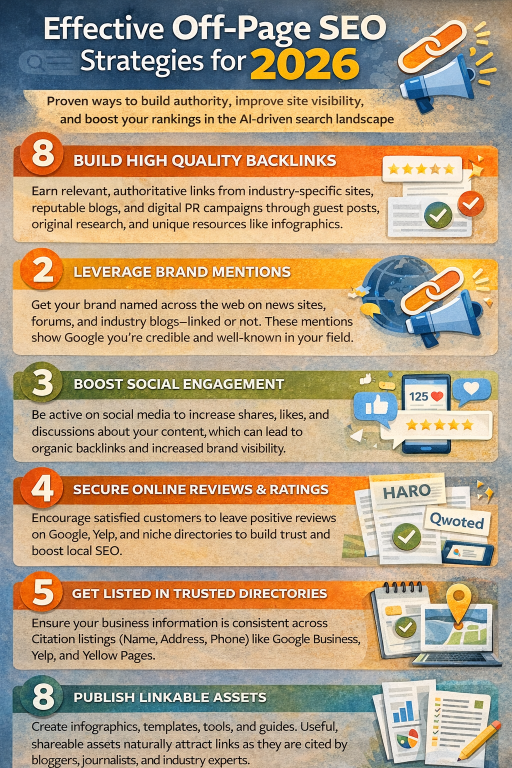
In 2026, off-page SEO is less about “building links” and more about earning recognition.
Why Off-Page SEO Matters So Much Now
Search engines have matured. Keyword placement alone no longer decides rankings.
What matters now is proof. Proof that your website is real. Proof that others find it useful. Proof that it deserves attention.
From what I’ve seen, websites with strong off-page signals recover faster from updates, rank more consistently, and compete better in crowded spaces.
If your site lacks external validation, growth becomes slow and unstable—no matter how good your content is.
The Off-Page Signals That Make the Biggest Difference
Not all signals carry equal weight. Here are the ones that consistently move the needle.
Backlinks
Backlinks still matter. A lot.
But only the right ones. A single link from a trusted, relevant website often does more than dozens of low-quality links.
The best backlinks feel natural. They exist because your content genuinely helped someone.
Brand Mentions
Even without a link, brand mentions add value.
When blogs, forums, or publications talk about your brand, it reinforces legitimacy. Over time, those mentions help Google understand that you’re a real entity, not just another website.
Social Activity
Social signals don’t directly boost rankings, but they influence everything around them.
When content is shared, discussed, or debated, it gains visibility. Visibility leads to links. Links lead to authority.
Reviews and Trust Signals
For local and service-based businesses, reviews are impossible to ignore.
Consistent, honest feedback builds trust with users and strengthens local search presence.
Citations and Listings
Accurate business details across directories help Google verify your identity.
This is especially important if you rely on local traffic.
How I Approach Link Building in 2026
I no longer think in terms of “link building campaigns.” I focus on creating reasons for others to link.
Content That Earns Links
Content earns links when it’s useful, clear, and different.
That usually means:
- Solving a real problem
- Sharing original insight
- Explaining something better than others
If your content helps people do their work better, links follow naturally.
Guest Posting (With Standards)
Guest posting still works, but only when quality is non-negotiable.
I look for websites with real readers and strong editorial values. If the article wouldn’t be published without a link, it’s not worth writing.
Broken Link Outreach
This strategy still works because it’s helpful.
You point out a problem and offer a solution. When done politely and relevantly, it builds goodwill as well as links.
Learning from Competitors
Competitor backlinks reveal patterns.
If respected sites link to similar content, it’s often a sign of opportunity—provided your content adds something meaningful.
Digital PR
Journalists want insight, not promotion.
When you share thoughtful commentary or data, mentions and links come naturally. These links tend to be the strongest ones you can earn.
Visual and Practical Assets
Templates, visuals, and simple tools are easy to reference.
They lower the effort for others to link to you.
Off-Page SEO Tactics I Still Trust
Some approaches continue to work when used honestly.
- Being active on social platforms where your audience actually is
- Earning mentions from people who already have trust
- Answering questions on forums without selling
- Keeping business listings accurate
- Saying yes to interviews and discussions
None of these are shortcuts. But they build real presence.
Internal Linking: The Quiet Multiplier
Internal linking doesn’t get enough credit.
When one page earns authority, internal links help spread that value across your site. They also guide readers and clarify structure for search engines.
Good internal linking makes every external link work harder.
Closing Thoughts
Off-page SEO in 2026 isn’t about manipulation. It’s about reputation. If people trust your work, talk about it, and reference it, search engines will follow. Focus on being useful. Be consistent. Build relationships instead of chasing links. This approach takes more time, but it’s the reason some websites grow steadily while others keep starting over.